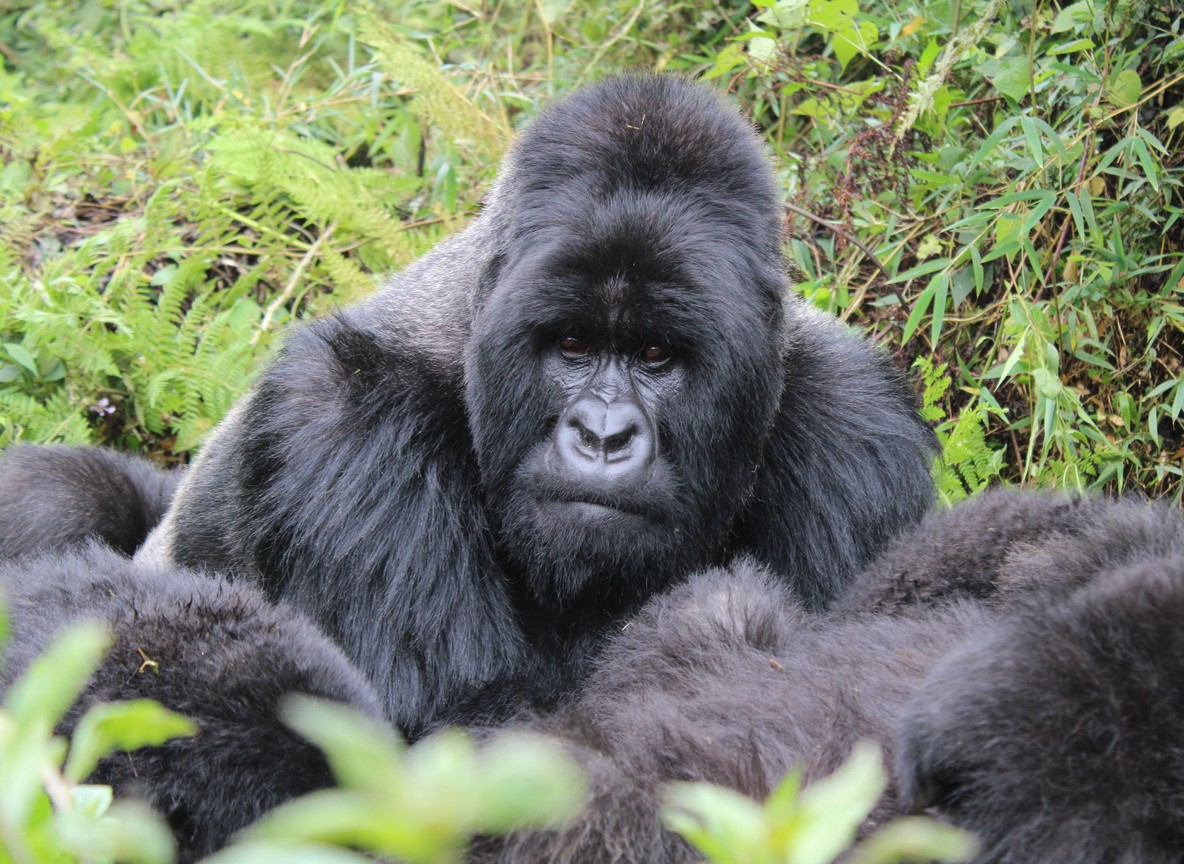
A Rwanda gorilla permit costs USD 1,500. Uganda’s standard permit costs USD 800, less than half. That gap looks simple until you ask what each price actually includes. Group sizes, park size, drive times, and how many other trekkers you share a trail with all shift depending on which side of the Virunga volcanoes you book. Touring Insights breaks down the real numbers behind both permits, so you can decide which country matches your budget and your patience for logistics.
What Rwanda’s Gorilla Permit Actually Costs
Rwanda sells one gorilla trekking permit at one price: USD 1,500 per person, set in 2017 and unchanged since. That fee covers a single trek into Volcanoes National Park, a 160 km2 stretch of the Virunga Massif near Musanze in northwest Rwanda. The park runs 12 habituated gorilla families for tourism, releasing roughly 96 permits a day, eight trekkers per family, one group per family per day. Ten percent of park revenue flows back to communities bordering the park, funding schools and health clinics under Rwanda Development Board’s revenue-sharing scheme. A trek caps at one hour with the gorillas once your group finds them, and the minimum trekking age is 15.
What Uganda’s Gorilla Permit Actually Costs
Uganda splits its pricing into two products. The standard trekking permit runs USD 800 per person for foreign non-residents. It covers Bwindi Impenetrable National Park’s four sectors (Buhoma, Ruhija, Rushaga, and Nkuringo) plus Mgahinga Gorilla National Park’s single Nyakagezi family. Roughly 20 habituated families operate across both parks, pushing daily permit availability well above Rwanda’s 96. The Uganda Wildlife Authority also sells a gorilla habituation experience permit. It buys four hours observing a family still being acclimated to human contact, rather than the usual one-hour visit, and caps groups at four people. UWA raised that habituation fee from USD 1,500 to USD 1,800 effective July 1, 2026, alongside new low-season discounts on standard permits. Bwindi covers 331 km2; Mgahinga, the smallest of the three parks in this comparison, covers just 33.7 km2.
Rwanda vs Uganda Gorilla Permit: Side by Side
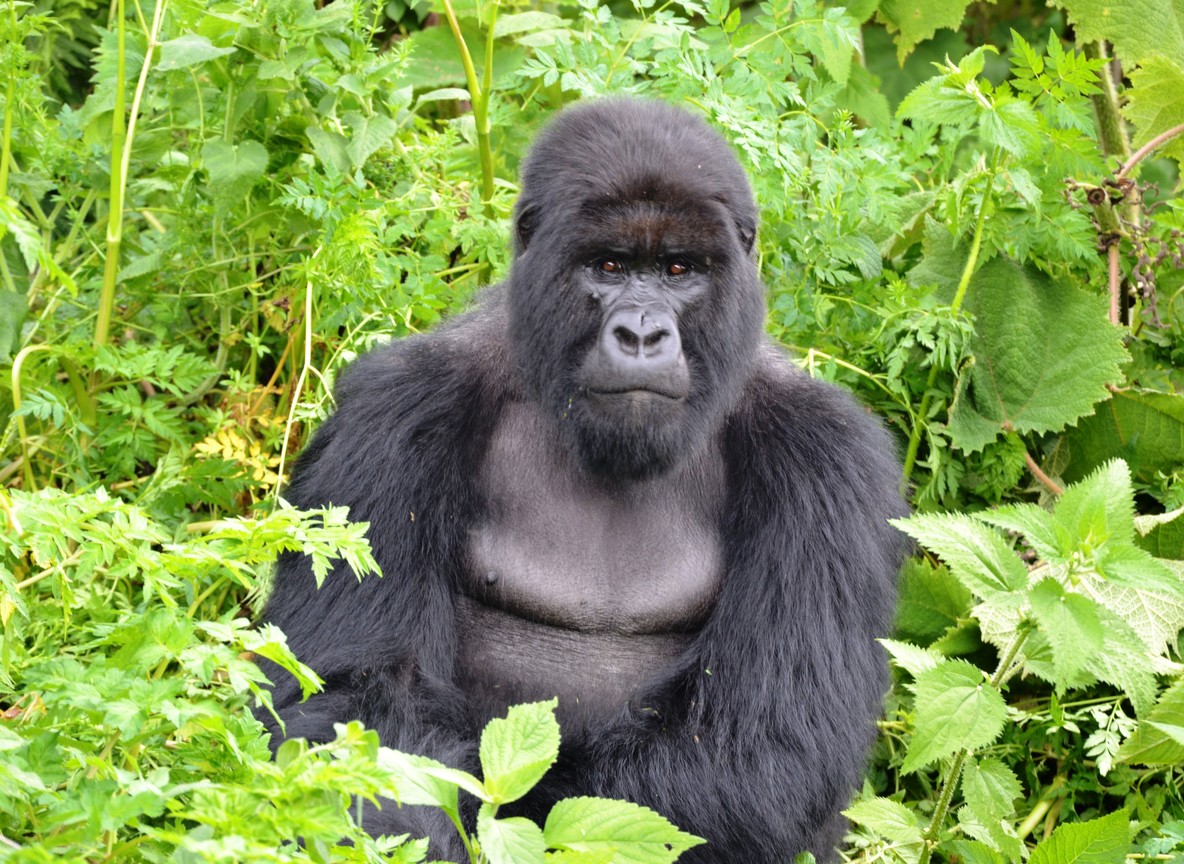
Neither country’s fee is wrong for the money. Rwanda charges more and delivers fewer permits into a smaller park, which keeps trails and lodges less crowded. Uganda charges less and spreads trekkers across a bigger, more rugged park with more sector choice.
| Detail | Rwanda (Volcanoes NP) | Uganda (Bwindi + Mgahinga) |
|---|---|---|
| Standard permit price (non-resident, 2026) | USD 1,500 | USD 800 |
| Habituation experience price (2026) | Not offered | USD 1,800 (raised from USD 1,500, Jul 1 2026) |
| Habituated gorilla families | 12 | approx. 20 across both parks |
| Daily permits (standard trek) | approx. 96 | approx. 160+ across four Bwindi sectors, plus 8 at Mgahinga |
| Park size | approx. 160 km2 | Bwindi 331 km2; Mgahinga 33.7 km2 |
| Time with gorillas | 1 hour | 1 hour (standard); 4 hours (habituation) |
| Max group size per trek | 8 | 8 (standard); 4 (habituation) |
| Minimum age | 15 | 15 |
| Community revenue share | 10% to bordering communities | 20% of Uganda gorilla permit revenue to local communities |
| Nearest international hub | Kigali International Airport (KGL) | Entebbe International Airport (EBB) |
Getting to the Gorillas: Access and Drive Times
Rwanda wins on logistics before you ever reach the forest. Kigali International Airport sits roughly 110 km from the Volcanoes National Park headquarters at Kinigi, a paved drive of about two to two and a half hours. Most visitors trek the same morning they check the park briefing board. Uganda demands more travel patience. Entebbe International Airport sits roughly 460 to 520 km from Bwindi’s Buhoma sector by road, an eight to nine hour drive on mixed tarmac and murram. Most operators fly clients instead. That domestic hop takes about one to one and a half hours, landing at Kihihi airstrip near Buhoma or Kisoro airstrip near Rushaga, Nkuringo, and Mgahinga. Either way, budget a minimum of two full travel days for Uganda against roughly half a day for Rwanda.
What the Price Gap Actually Buys You
Rwanda’s higher fee buys density control. With only 96 permits released daily across 12 families in a compact 160 km2 park, trails see fewer groups. Lodges also cluster within a short drive of Kinigi, cutting transfer time before and after the trek. Volcanoes National Park also sits closest to a capital city airport of any gorilla destination in the region, which shortens total trip length for travelers with limited vacation days. Uganda’s lower fee buys scale and choice. Four Bwindi sectors mean more route variety and more lodge price points, from budget to ultra-luxury. Shoulder season also holds more last-minute availability than Rwanda, which often sells out months ahead. Neither buys a better gorilla encounter. Family size, terrain difficulty, and weather affect the trek itself far more than which country issued the permit.
Uganda’s Habituation Experience: Is the Higher Price Worth It
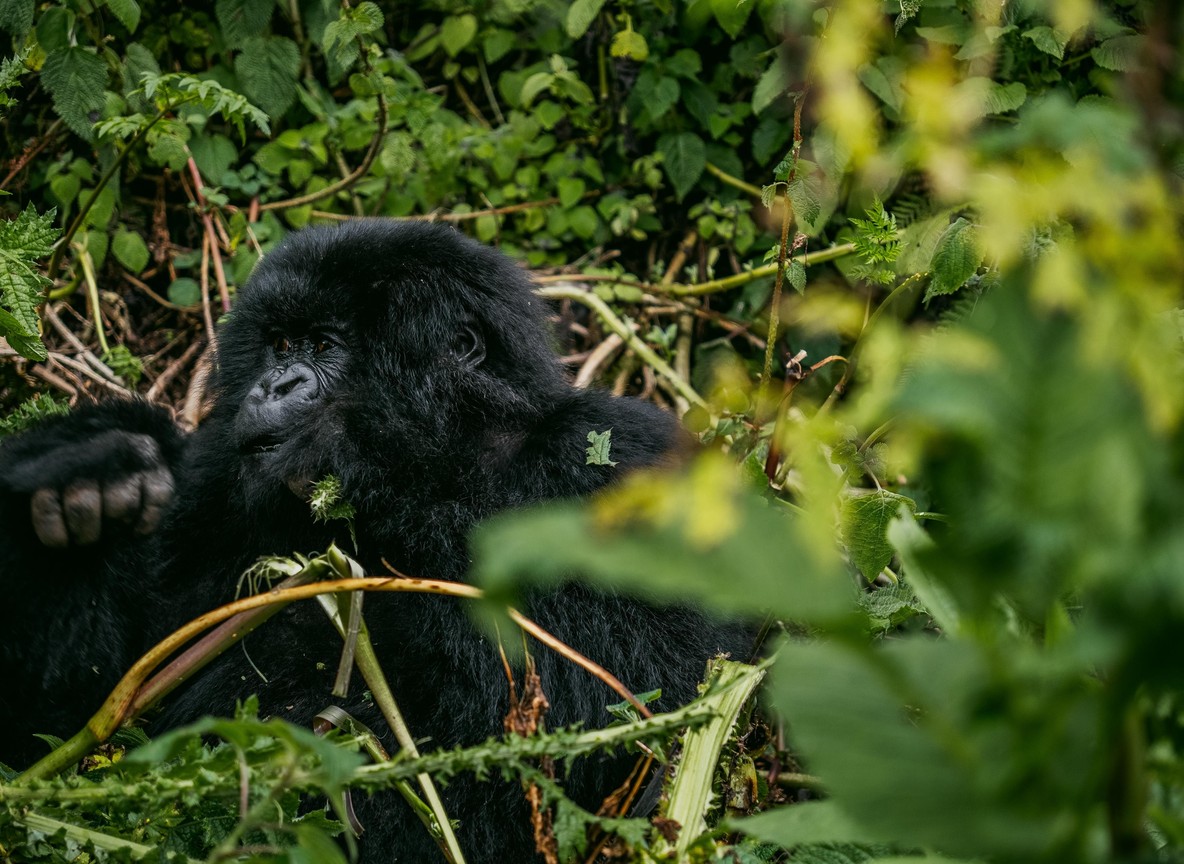
At USD 1,800, Uganda’s habituation permit now costs more than Rwanda’s standard trek. What it buys is time, four hours with a family instead of one, and a smaller group of four instead of eight. The families involved are still adjusting to researchers and trackers, so behavior looks less settled than a fully habituated group, more alert, more likely to move. It only runs in Bwindi’s Rushaga sector, so it locks your itinerary to that corner of the park. Photographers and repeat visitors who already have a standard trek behind them tend to value it most. First-time trekkers usually get more value from a standard permit and a second day’s trek in a different family instead.
Which Country Fits Your Trip
Pick Rwanda if your trip window is short, you want the shortest possible airport-to-forest transfer, and you prefer a smaller, quieter park even at a higher price. Choose Uganda if budget matters more than trip length, you want sector choice or the four-hour habituation option, and you can absorb a longer overland or short domestic flight leg. Many multi-country itineraries now pair a Rwanda gorilla trek with Uganda chimpanzee tracking in Kibale. That split spreads the primate budget across two parks instead of doubling gorilla fees in one.
Planning Facts: Rwanda vs Uganda Gorilla Trekking
| Detail | Rwanda | Uganda |
|---|---|---|
| Park | Volcanoes National Park | Bwindi Impenetrable NP / Mgahinga Gorilla NP |
| Standard permit (non-resident) | USD 1,500 | USD 800 |
| Nearest airport | Kigali International (KGL) | Entebbe International (EBB) |
| Airport to park | approx. 110 km, 2-2.5 hr drive | approx. 460-520 km, 8-9 hr drive, or approx. 1-1.5 hr domestic flight |
| Park size | approx. 160 km2 | Bwindi 331 km2, Mgahinga 33.7 km2 |
| Habituated families | 12 | approx. 20 |
| Best booking lead time | 6-12 months (peak Jun-Sep, Dec-Feb) | 3-6 months (more shoulder-season availability) |
Permit prices change by government notice. Confirm current rates with Rwanda Development Board or the Uganda Wildlife Authority before you book.
Explorer Notes
Book Rwanda permits through Rwanda Development Board or a licensed operator at least six months out for June to September. Dry-season slots sell out early even at the higher price. In Uganda, ask which Bwindi sector your lodge sits in before you book the lodge itself. Buhoma and Ruhija treks tend to run shorter and less steep than Rushaga and Nkuringo, and that difference matters more than most itineraries admit. Pack gardening gloves for either country, nettles line most trails and bite through thin fabric. Porters cost an indicative USD 15-20 per day in both parks and are worth hiring even if you consider yourself fit; steep volcanic mud humbles most first-timers. Rain gear beats a warm jacket. You sweat climbing and chill fast once you stop moving near the gorillas.
What to Read Next
- Kenya vs Rwanda: Gorillas or the Great Migration First?
- Uganda’s Gorilla Permit Just Got More Expensive: What the 2026 Price Hike Means
- What Uganda’s New Gorilla-Trekking Health Rules Mean for Your Bwindi or Mgahinga Trip
FAQ
Why does Rwanda’s gorilla permit cost more than Uganda’s? Rwanda releases fewer permits, about 96 a day across 12 families in a smaller park, and sits closer to its capital airport. Uganda spreads more permits across a bigger park with more sectors. That lowers the price but adds travel time.
Can I trek gorillas in both Rwanda and Uganda on one trip? Yes. Many itineraries fly between Kigali and Entebbe or cross the Cyanika/Katuna border overland, pairing a Rwanda trek with Uganda chimpanzee tracking or a second gorilla trek in Bwindi.
Is the Uganda gorilla habituation experience worth the extra cost? It suits repeat visitors and photographers who want four hours instead of one and a smaller group. First-time trekkers usually get more value from a standard permit.
How far in advance should I book a gorilla permit? Book Rwanda six to twelve months ahead for June-September or December-February. Uganda has more shoulder-season flexibility, but three to six months out is still the safer window.
Does the permit price include park entry and a guide? Yes. Both countries’ gorilla trekking permits include park entry, an armed ranger guide, and trackers already in the forest locating the family before your group sets out.
Rwanda and Uganda both put you within feet of a wild mountain gorilla family. The permit price mostly buys logistics, not a better encounter. Check the Tour Packages page for itineraries that pair either country’s gorilla trek with the rest of an East Africa circuit. Ask your operator which park sector fits the fitness level and timeline you actually have.